2026-08-28 11:01:35
Artificial intelligence could help doctors detect heart disease in women by analysing routine mammograms, according to new research.
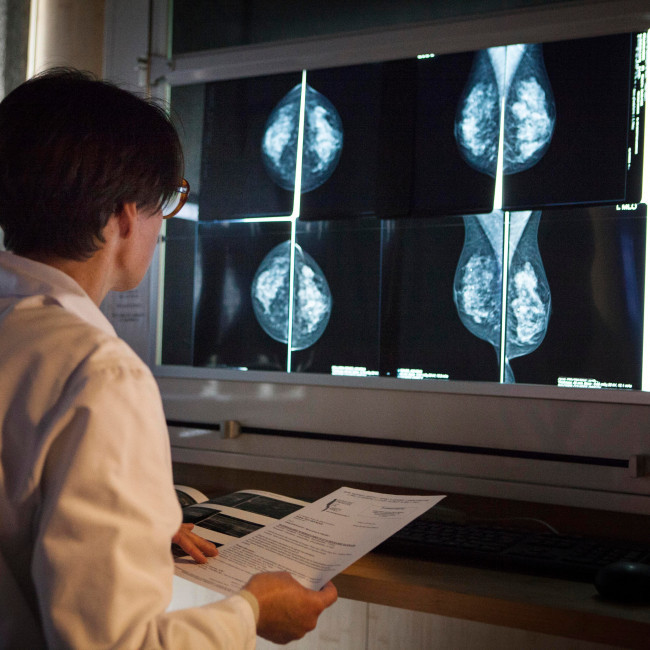
The technology was able to identify women with coronary heart disease, high blood pressure and a history of stroke from breast scans alone, raising the possibility that breast cancer screening could also help identify cardiovascular risks.
Heart disease is the world’s leading cause of death among women, but it is frequently diagnosed late or missed altogether.
Researchers in Israel analysed 97,364 mammogram scans from 29,921 women with an average age of 54.
Medical records showed that 16 per cent had high blood pressure, 2.5 per cent had coronary heart disease and 2.5 per cent had previously suffered a stroke.
A machine-learning model was then trained to identify the conditions from mammograms.
It correctly distinguished women who had suffered a stroke from those who had not in 86 per cent of cases.
Its accuracy was 79 per cent for high blood pressure and 78 per cent for coronary heart disease.
The results remained consistent regardless of a woman’s age or whether she also had breast cancer.
Dr Viana Copeland, from Tel Aviv University, presented the findings at the European Society of Cardiology’s annual congress in Munich.
She said: “Despite being the leading cause of death in women worldwide, CVD [cardiovascular disease] is consistently underdiagnosed and undertreated.”
Copeland said many women attend routine breast screening even when they have not sought medical help for cardiovascular symptoms.
Analysing existing mammograms could therefore offer a scalable way to identify women at higher risk without requiring another imaging test, she said.
Researchers are now working to improve the AI model’s accuracy, reduce false results and expand the number of cardiovascular conditions it can identify.
Elena Arbelo, a European Society of Cardiology expert, described the findings as “compelling”.
She said: “A mammogram may one day do more than look for breast cancer, it may also offer a window on to cardiovascular health.”
However, she stressed that further research is needed before the technology can be introduced into clinical practice.
Dr Sonya Babu-Narayan, clinical director of the British Heart Foundation, also welcomed the findings.
She said women are often “underdiagnosed, undertreated and typically underrepresented in clinical research” when it comes to heart disease.
She said: “If the approach used in this large study from Israel is further proven, it could lead to better and earlier cardiovascular disease detection and prevention for women.”
Dr Babu-Narayan added that AI could eventually allow breast screening programmes to become dual-purpose, helping detect both breast cancer and cardiovascular disease.
Visit Bang Premier (main website)